Piemonte · Asti
Bagna càuda
Piedmontese warm garlic and anchovy dip
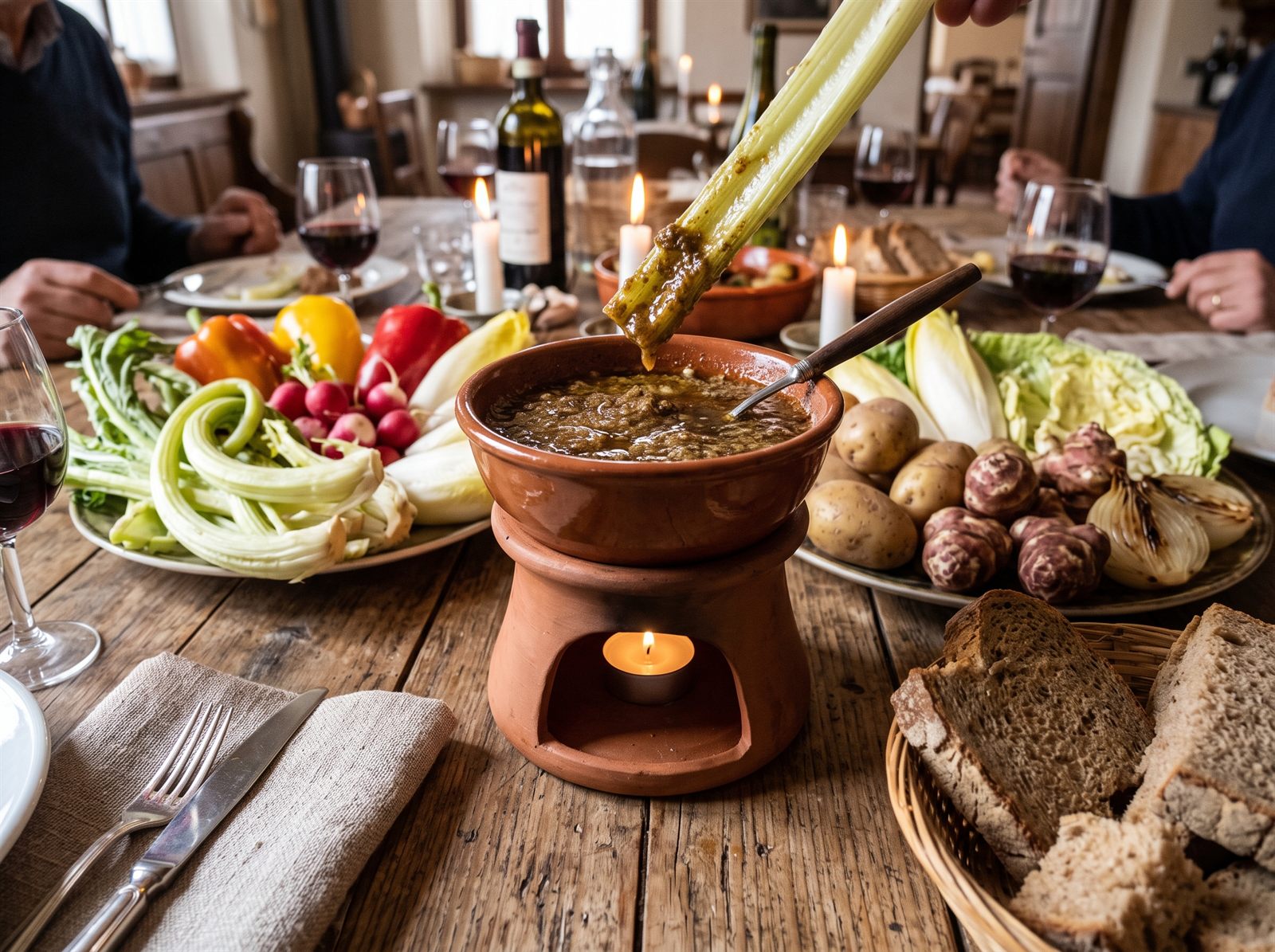
A pot of garlic, anchovies and olive oil kept warm at the table, with autumn vegetables for dipping — in the recipe the Accademia Italiana della Cucina deposited in Asti in 2005.
- Course
- AntipastoStarter
- Serves
- 4
- Hands-on
- 1 h 4 min
- Cooking
- 1 h 40 min
- Resting
- 2 h+
La provenienza
Where this recipe comes from
Bagna càuda means ‘hot bath’ in Piedmontese. It is a dish of the grape harvest in the Asti and Monferrato hills, made with salted anchovies that once reached Piedmont along the salt roads from Liguria.
On 7 February 2005 the Asti delegation of the Accademia Italiana della Cucina deposited a reference recipe with a notary in Costigliole d'Asti. The deed is not published online; this recipe follows the detailed accounts of it listed in the sources.
It comes with customs of its own: you never dip bread into the shared pot, which would take more than your share, and at the end of the evening eggs are scrambled in the last of the sauce.
- Provenance
- Deposited recipeAn official recipe filed with an Italian Chamber of Commerce or a notary by a recognised culinary body.
- Defined by
- Accademia Italiana della Cucina, Asti delegation
- Reference
- Recipe deposited with a notary in Costigliole d'Asti, 2005
Ingredienti
Ingredients
To dip
Equipment
- Earthenware pot (or a heavy saucepan) and a heat diffuser
- A ‘fujot’ — the traditional pot warmer with a candle or burner — to keep the sauce warm at the table
- Oven and baking trays for the cooked vegetables
- Wooden spoon, small knife, kitchen paper
Preparazione
Method
Allow about 3 hours, most of it for the vegetables: the onions and peppers go in the oven while you prepare the raw ones. The sauce itself takes 40 minutes of very gentle cooking. Soak the earthenware pot 2 hours ahead.
- 1 h 4 minhands-on
- 1 h 40 mincooking
- 2 hresting, at least
Ahead of time
-
Official textRest 2 h
If you use an earthenware pot, soak it in cold water for two hours, then dry it. This stops it cracking on the heat.
-
Official textCooking 40 min – 1 hTemp 180 °C–200 °C
Bake the whole onions in their skins at 180 °C for about an hour, until soft. Roast the peppers at 200 °C for 30–40 minutes, turning, until the skins blister; cover them for 10 minutes, then peel and cut into strips.
-
Official textCooking 20–25 min
Steam the potatoes for 20–25 minutes and boil the turnips until just tender. Slice the pumpkin and fry it in a little oil until golden.
-
Official textHands-on 30 min
Clean the cardoons, removing the strings, cut them into sticks and keep them in water with lemon juice so they do not darken. Cut the Jerusalem artichokes into slices, separate the cauliflower into florets and the kale into leaves.
The sauce
-
Official textHands-on 15 min
Separate and peel all the cloves, cut each in half lengthways and remove the green germ in the centre.
Tip The germ is what makes garlic sharp and hard to digest: removing it is what makes bagna càuda sweet.
-
Official textCooking 20 minHeat lowest, on a diffuser — no bubbles
Put the garlic in the pot with part of the oil — about 125 ml — on the heat diffuser over the lowest heat. Cook for about 20 minutes: the oil must never sizzle and the garlic must not colour.
Check The garlic is soft enough to crush against the side of the pot, and still white or ivory.
Tip For a gentler sauce — an accepted variant — cook the garlic in a glass of milk instead, then drain it before continuing.
-
Official textHands-on 15 min
While the garlic cooks, rinse the anchovies under running water, open them, remove the backbone and tail, and dip them for a few minutes in red wine. Drain and pat dry.
-
Official textCooking 20 minHeat lowest, on a diffuser
Add the anchovies and the rest of the oil to the pot. Keep it on the lowest heat for another 20 minutes, stirring and pressing with the wooden spoon until the garlic and anchovies melt into a smooth cream.
Check A smooth, brown-gold cream with no visible pieces of anchovy.
-
Official textHands-on 1 min
Off the heat, stir in a small knob of butter per person for a rounder, more delicate sauce.
At the table
-
Official text
Set the pot over the fujot in the centre of the table, or pour the sauce into individual fujot, and keep it hot but never boiling. Everyone dips the vegetables in turn.
Tip By custom, bread is never dipped into the shared pot.
-
Official textHands-on 3 min
When only a little sauce is left, break a few eggs into the pot and scramble them gently in it.
The essentials, for cooks who know the dish. Switch to Detailed for quantities, temperatures, times and checks at every step.
Tap a step to mark where you are. Timers keep running while you scroll.
Errori comuni
Common mistakes
- Letting the garlic brown — it becomes bitter and overpowering.
- Dipping bread into the shared pot: by custom, bread is not used.
- Rushing it: the garlic needs a long, gentle cook to turn sweet.
Fuori dall'Italia
Cooking it outside Italy
- For a gentler bagna càuda — an accepted variant — first cook the garlic in a glass of milk instead of oil, drain it, then continue with the anchovies and oil.
- Cardoons are rare abroad; celery hearts and fennel are the closest substitutes.