Liguria · Genova
Pesto alla genovese
Genoese basil pesto
Basil, garlic, pine nuts, two cheeses and olive oil, pounded in a marble mortar — the recipe of the Consorzio del Pesto Genovese.
- Course
- SugoSauce
- Serves
- 6
- Hands-on
- 25 min
- Cooking
- 10 min
La provenienza
Where this recipe comes from
Pesto takes its name from ‘pestare’, to pound. The name ‘pesto genovese’ has no EU protection, so the Consorzio del Pesto Genovese publishes a reference recipe and a production standard for makers who want to follow it; pesto is also on Liguria's list of traditional food products. Genoa holds a world championship of mortar-made pesto.
The basil itself, Basilico Genovese, has been a Protected Designation of Origin since 2005: young, small-leaved plants with no hint of mint.
- Provenance
- Consortium or town standardA reference recipe set by a protection consortium or by the town the dish is named after.
- Defined by
- Consorzio del Pesto Genovese
- Reference
- Consortium reference recipe; Basilico Genovese is a PDO
Ingredienti
Ingredients
For 600 g of pasta
Equipment
- Marble mortar and wooden pestle — the consortium's method
- Clean cotton cloth to dry the basil
- Large pot for the pasta (about 6 l of water for 600 g)
- Kitchen scale
Preparazione
Method
About 20 minutes in the mortar, then 10–15 minutes for the pasta. Make the pesto while the pasta water heats, and never cook it.
- 25 minhands-on
- 10 mincooking
The pesto
-
Official textHands-on 5 min
Rinse the basil leaves in cold water without squeezing them, then lay them on the cloth and pat them completely dry.
Tip Wet leaves make a pale, watery pesto that darkens quickly. Every leaf must be dry.
-
Official textHands-on 2 min
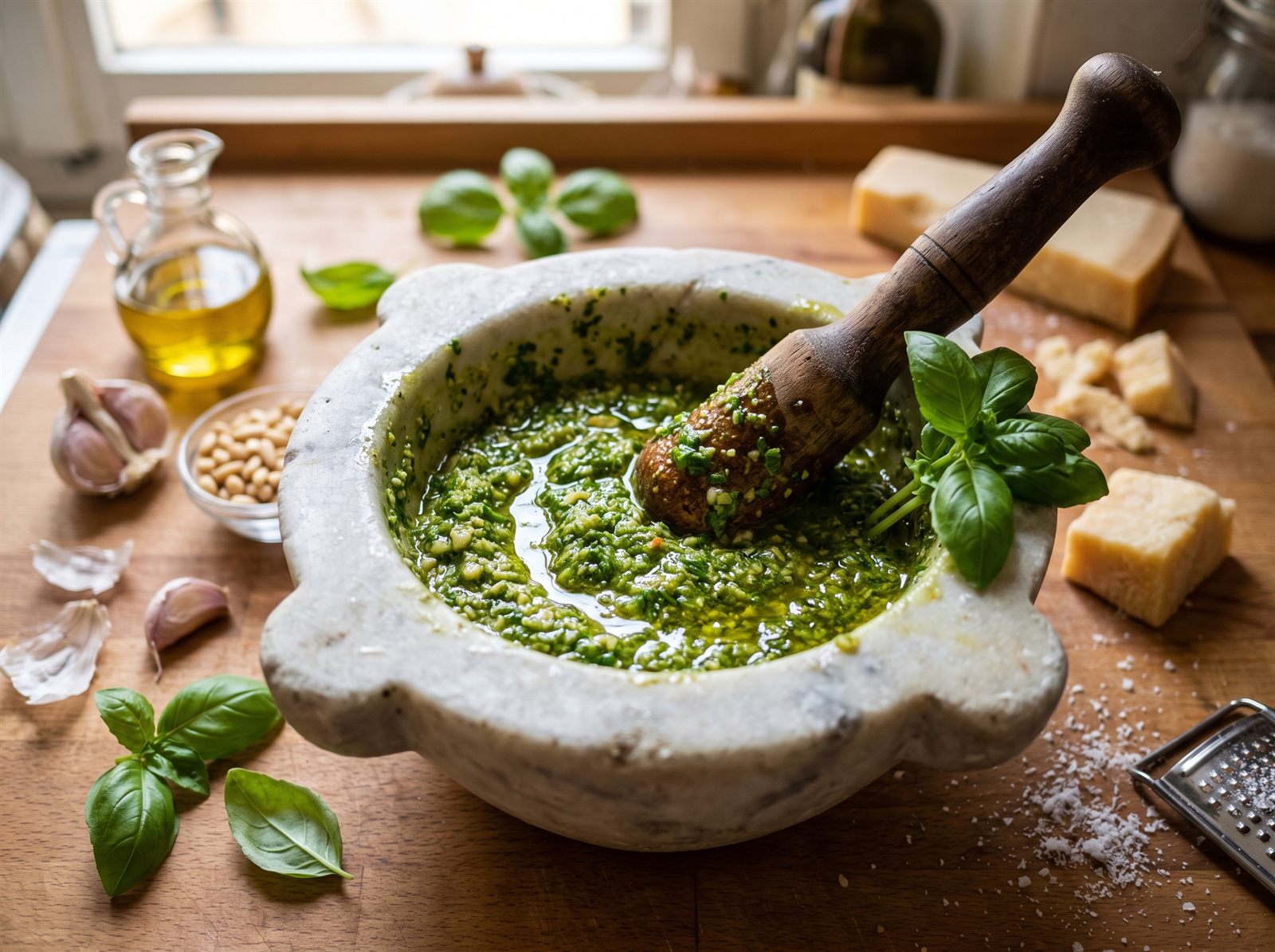
Put the garlic (about one clove for every 30 basil leaves) and the coarse salt in the mortar and crush them with the pestle into a cream.
-
Official textHands-on 2 min
Add the pine nuts and work them into the garlic until creamy.
-
Official textHands-on 10 min
Add the basil a few leaves at a time. Instead of pounding, rotate the pestle against the sides of the mortar with a slow, gentle circular movement, tearing the leaves rather than crushing them. Keep going until the basil has released a bright green liquid.
Check A bright green, creamy paste with no whole leaves left.
Tip Work at room temperature and steadily: basil starts to darken as soon as it is cut.
-
Official textHands-on 2 min
Work in the grated Parmigiano (or Grana Padano) and pecorino.
-
Official textHands-on 2 min
Pour in the olive oil drop by drop, stirring with the pestle, until the pesto is smooth and glossy.
Tip If you are not using it straight away, cover it with a thin layer of oil and keep it in the fridge for a day or two.
The pasta
-
Cooking 10–12 min
Cook the trofie or trenette in plenty of salted water (about 10 g per litre) until al dente. In Liguria, sliced potatoes and green beans are often cooked in the same pot — a tradition, not part of the consortium's recipe.
Check The pasta is al dente, with a little bite at the centre.
-
Official textHands-on 2 min
Put the pesto in a warm bowl and loosen it with 2–3 tablespoons of the pasta cooking water. Drain the pasta, toss it with the pesto and serve at once.
Tip Never heat pesto in a pan: the basil cooks, turns dark and loses its scent.
The essentials, for cooks who know the dish. Switch to Detailed for quantities, temperatures, times and checks at every step.
Tap a step to mark where you are. Timers keep running while you scroll.
Errori comuni
Common mistakes
- Using a blender at high speed: the heat darkens the basil and makes it bitter.
- Pounding hard: tear the leaves with a circular motion instead.
- Using cashews, seed oils, cream or ricotta — they are not part of the recipe. (Walnuts in place of pine nuts are allowed.)
Fuori dall'Italia
Cooking it outside Italy
- Choose the smallest, youngest basil leaves you can find; large-leaf basil tastes of mint and clove.
- A mild, fruity olive oil works best: a strong, peppery oil overwhelms the basil.