Toscana · Firenze
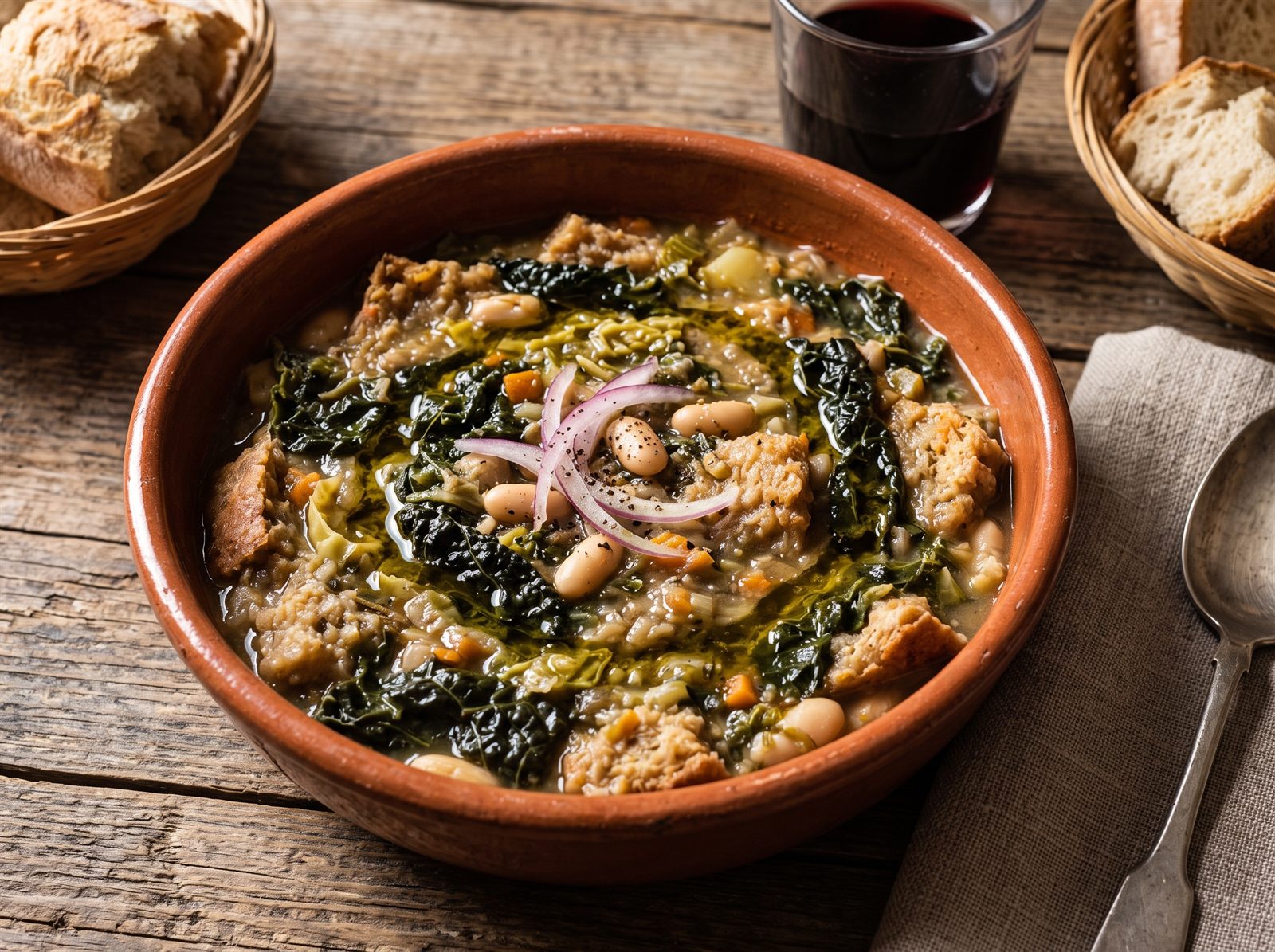
Ribollita
Tuscan bread, bean and cabbage soup
A thick winter soup of cannellini beans, cavolo nero, Savoy cabbage and stale Tuscan bread, made the day before and ‘re-boiled’ — in the recipe the Accademia deposited in Florence in 2001.
- Course
- Primo piattoSoup
- Serves
- 6
- Hands-on
- 47 min
- Cooking
- 3 h 10 min
- Plan
- 3 days
La provenienza
Where this recipe comes from
Ribollita means ‘boiled again’: the soup is made one day and brought back to the boil the next, when it is at its best. On 24 May 2001, after a long survey of Florentine trattorias and trials in the kitchen, the Florence delegation of the Accademia Italiana della Cucina deposited the recipe with a notary.
Cavolo nero is indispensable, and sweetest after the first frosts. The bread is the unsalted Tuscan loaf; the beans are dried cannellini, never tinned; and the soup is served with raw olive oil and no cheese.
- Provenance
- Deposited recipeAn official recipe filed with an Italian Chamber of Commerce or a notary by a recognised culinary body.
- Defined by
- Accademia Italiana della Cucina, Florence delegation
- Reference
- Recipe deposited with a notary in Florence, 2001
Ingredienti
Ingredients
Equipment
- Earthenware pot (the deposited recipe's choice) or a heavy casserole of at least 5 l
- Saucepan for the beans
- Food mill or sieve (or a blender) for the bean purée
- Soup tureen or deep dish for layering with the bread
Preparazione
Method
Three days, but little work on each. Day 1: put the beans to soak. Day 2: cook the beans and the soup (about 3 hours, mostly unattended), layer it with the bread and refrigerate it overnight. Day 3: bring it back to the boil — the ‘ribollitura’ — and serve.
- 47 minhands-on
- 3 h 10 mincooking
- 3 daysfrom start to table
Day 1 — soak the beans
-
Official textRest 12 h
Rinse the dried beans and cover them with three times their volume of cold water. Leave them for 12 hours.
Tip The deposited recipe uses dried beans, never tinned: their cooking water is part of the soup.
Day 2 — the beans
-
Cooking 1 h 30 min – 2 hHeat low — barely simmering
Drain the beans, put them in the saucepan with fresh cold water to cover by 5 cm and bring slowly to the boil. Simmer very gently, partly covered, for 1½–2 hours, without salt until the last 10 minutes.
Check Squeeze a bean between two fingers: it is creamy right through, with no chalky core.
Tip Salt makes the skins tough if added at the start. Add about 8 g in the last 10 minutes.
Day 2 — the soup
Start the vegetables while the beans are cooking.
-
Official textHands-on 25 min
Strip the cavolo nero leaves from their stems; cut them, the Savoy cabbage and the chard into strips about 1 cm wide. Dice the potatoes (1.5 cm) and slice the onions, carrots and celery.
-
Official textCooking 10–15 minHeat medium-low
In the earthenware pot, warm about 6 tablespoons of olive oil and soften the onions, carrots and celery over medium-low heat until fragrant and golden at the edges, 10–15 minutes.
-
Official textCooking 15 minHeat medium
Add the chopped peeled tomatoes and cook for 5 minutes, then add the cavolo nero, Savoy cabbage, chard and potatoes and stir for about 10 minutes until the leaves wilt.
-
Official textHands-on 10 min
Pass half the cooked beans through the food mill with their cooking water and add the purée to the pot, with enough of the remaining bean water (or plain water) to just cover the vegetables.
-
Official textCooking 1 hHeat lowest
Cook on the lowest heat, lid ajar, for about an hour, stirring now and then and adding a little water if it gets too thick. Season with salt and pepper.
Check The cabbages are completely tender and the soup is thick and dense.
-
Official textCooking 5 min
Just before taking it off the heat, stir in the remaining whole beans and heat them through for 5 minutes.
-
Official textHands-on 10 min
Cut the stale bread into slices about 1 cm thick. In the tureen, lay a layer of bread, pour over half the soup, add another layer of bread and the rest of the soup.
-
Official textRest 12 hTemp 4 °C
Let the soup cool, then refrigerate it overnight. The bread soaks up the soup and the flavours come together.
Tip Cool it within 2 hours before refrigerating — a deep pot of soup stays warm for a long time.
Day 3 — the ‘ribollitura’
-
Official textCooking 10 minHeat medium-low
Put the soup back in the pot and heat it slowly, stirring gently, until it boils again — about 10 minutes once it is hot.
Check Thick enough that a spoon almost stands in it, and bubbling all the way through.
-
Official textHands-on 2 min
Serve in bowls with a generous drizzle of raw extra virgin olive oil. No cheese.
The essentials, for cooks who know the dish. Switch to Detailed for quantities, temperatures, times and checks at every step.
Tap a step to mark where you are. Timers keep running while you scroll.
Errori comuni
Common mistakes
- Serving it on the first day. It is called ‘re-boiled’ for a reason.
- Using tinned beans, or adding grated cheese at the table — neither belongs in the recipe.
Fuori dall'Italia
Cooking it outside Italy
- Use a plain bread with no salt, or very little, if Tuscan bread is not available.
- Many Tuscans serve it with thinly sliced raw red onion on the side — a habit, not part of the deposited recipe.